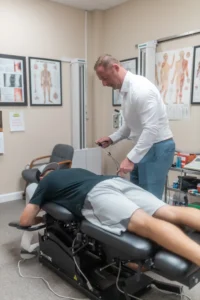
Spinal decompression is a non-surgical treatment that gently, electronically, and systematically stretches the spine to relieve pressure on compressed discs and nerves. For patients in Quincy, IL dealing with chronic back pain, sciatica, or disc-related issues, it offers a way to address the underlying problem without the risks and recovery time that come with surgery.
What Is Spinal Decompression?
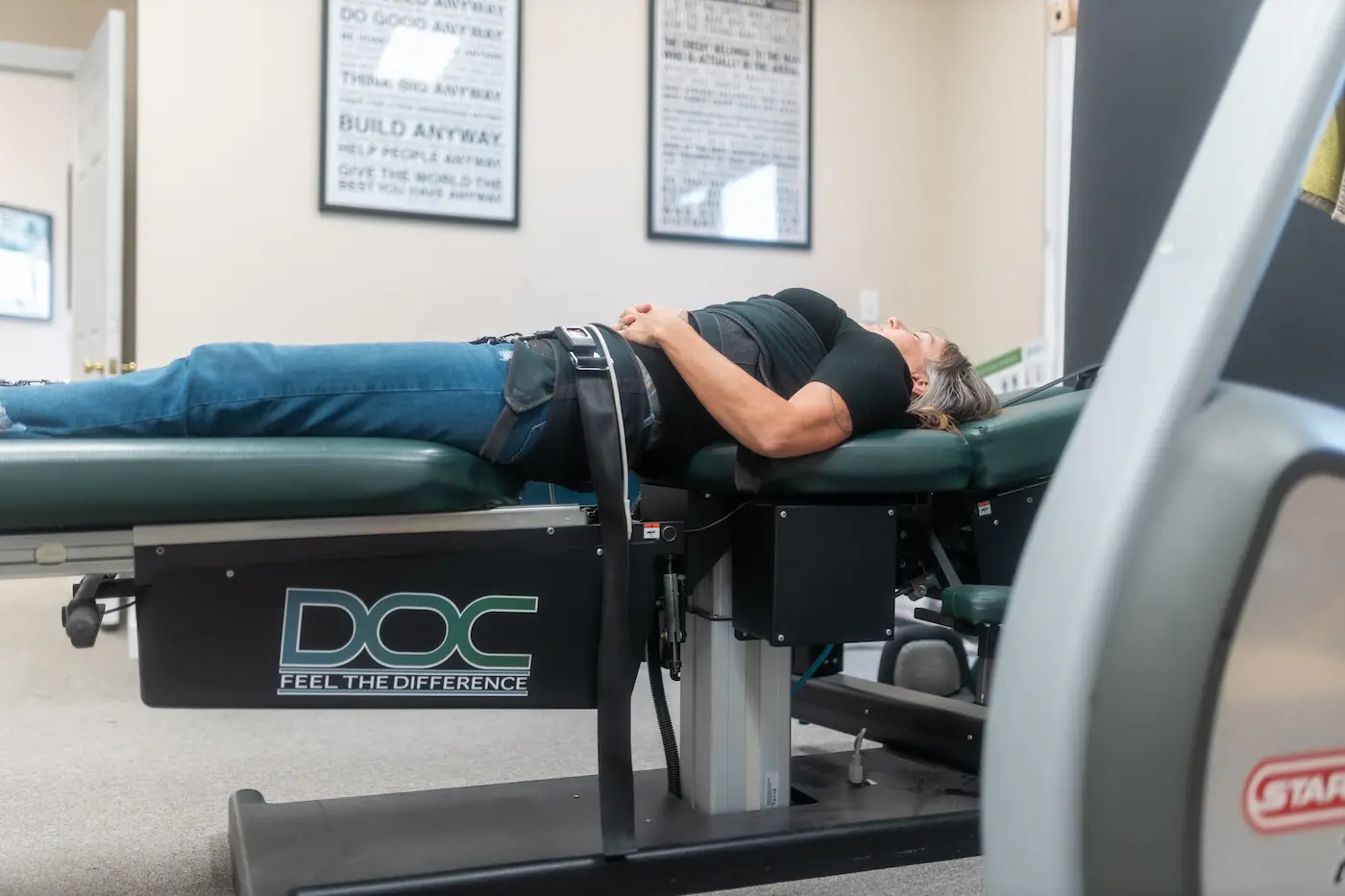
Spinal decompression uses gentle, controlled traction to create space between the vertebrae. This reduces pressure on the discs and nerves in the spine, which can allow bulging or herniated discs to retract slightly and take pressure off irritated nerves. It’s a passive treatment, meaning you simply relax while the table does the work.
Who Spinal Decompression Helps
Herniated and Bulging Discs
When a disc bulges or herniates, it can press on nearby nerves and cause pain that radiates well beyond the back itself. Decompression reduces that pressure directly, which is why it’s often recommended for herniated and bulging disc cases that haven’t responded to other care.
Sciatica
When a compressed disc or misaligned vertebra puts pressure on the sciatic nerve, the pain can shoot down the leg and make everyday movement difficult. Decompression targets this pressure at its source rather than just managing the pain in the leg, which is a common approach for sciatica that hasn’t improved with other treatment.
Chronic Back Pain That Hasn’t Responded to Other Care
Some patients have tried adjustments, rest, and other conservative treatment for their back pain without lasting relief. When disc compression is part of the underlying problem, decompression can address something that adjustments alone may not fully resolve.
How It Works as a Back Surgery Alternative
Surgery is sometimes presented as the only option for significant disc problems, but it comes with real risks, a lengthy recovery, and no guarantee the pain won’t return. Spinal decompression offers a way to address disc-related pressure without any of that, which is why many patients try it before committing to a surgical route.
It’s not a fit for every case, but for the right patient, it can provide meaningful relief that surgery would otherwise be considered for.
What a Decompression Session Looks Like
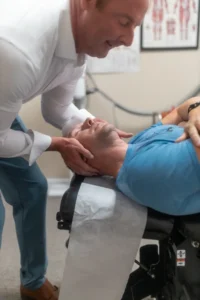
You’ll lie comfortably on the decompression table while a harness applies gentle, controlled traction to your spine. Sessions are relaxing rather than uncomfortable, and most patients find it easy to simply lie back and let the table do its work. Dr. Felsman builds decompression into a broader care plan as part of his overall approach to treatment, tailored to what your specific condition needs.
Ready to Explore Your Options?
If you’ve been told surgery might be your only option, it’s worth finding out whether spinal decompression could help first.