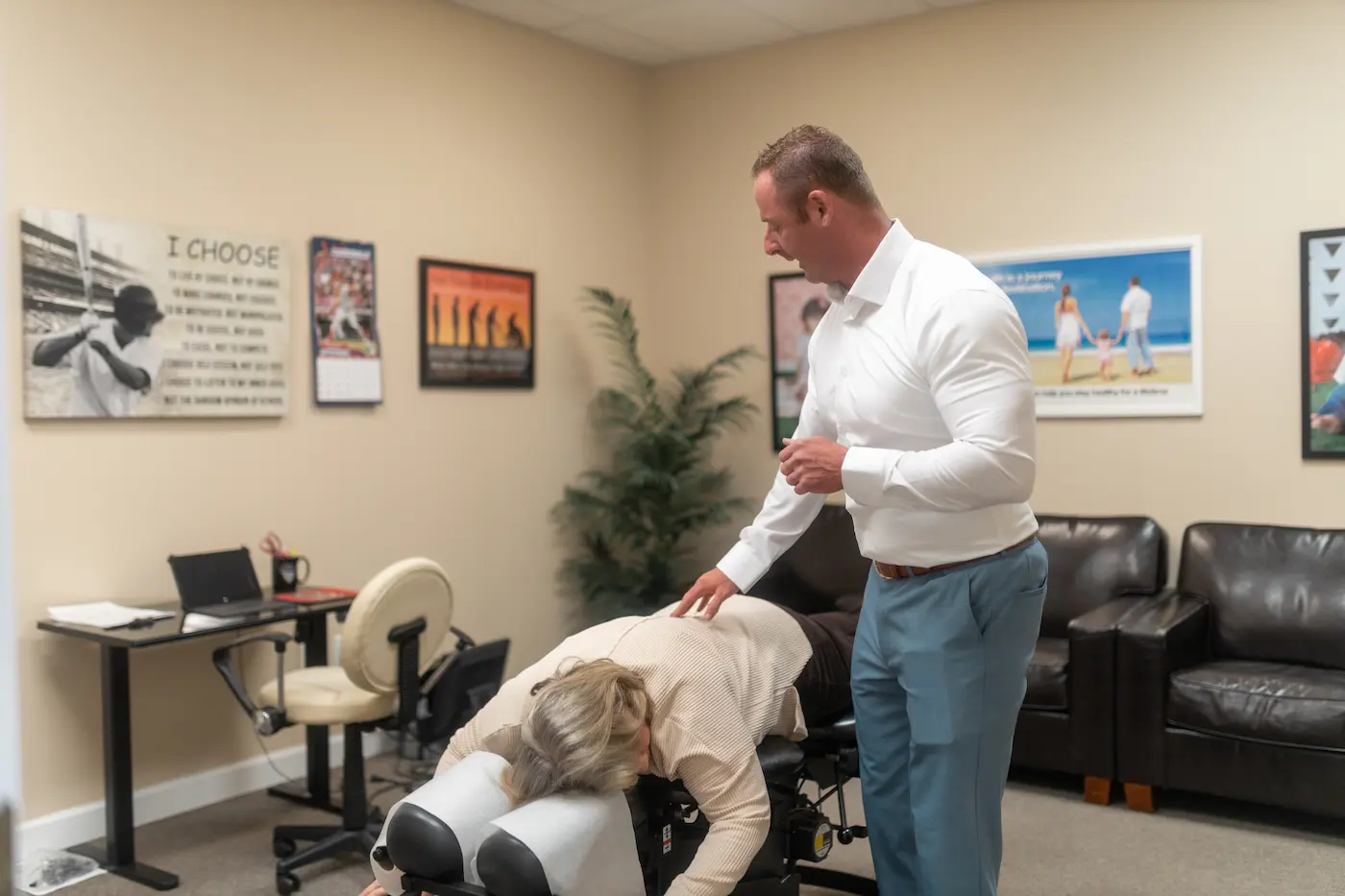
Sciatica is pain that travels from your lower back or buttock down the back of one leg, usually because something is irritating the sciatic nerve. In Quincy, the usual triggers are long drives, desk chairs without lumbar support, heavy lifting, and weekend yard work. Gentle chiropractic adjustments to the lower spine and hips may help ease pressure on that nerve. If leg pain, tingling, or numbness has stuck around for more than a week, it’s worth getting checked.
What Sciatica Actually Feels Like
Sciatica isn’t the same as a general backache. Most people describe it as a sharp, burning, or electric pain that shoots down one leg, sometimes past the knee and into the foot.
It can also show up as tingling, pins and needles, or a leg that feels heavy and weak. Many patients notice it gets worse after sitting for a while, when they cough or sneeze, or when they stand up after a long drive.
It usually affects one side. If you’re feeling symptoms in both legs at once, read the warning signs section further down before doing anything else.
Why Sciatica Flares Up
The sciatic nerve is the longest nerve in your body. It starts in the lower back, runs through the hips and buttocks, and travels down each leg. When something along that path puts pressure on it, the pain follows the nerve.
Sitting Too Long
Hours in a desk chair, a truck cab, or a work vehicle keep your lower back rounded and your hips tight. Chairs without lumbar support make it worse. It’s one of the most common patterns Dr. J sees in Quincy patients with sciatica.
Lifting and Twisting
Picking up something heavy while bending forward, or twisting while you lift, puts a lot of load on the lower spine. Yard work, moving furniture, and repetitive tasks on the job all fall into this category.
Long Drives
Road vibration plus a fixed sitting position is a tough combination for the lower back. Patients who commute across the river or spend a lot of time on the highway often notice their leg pain is worst right after they get out of the car.
Disc Problems
A herniated or bulging disc is one of the most common reasons the sciatic nerve gets irritated. When a disc in the lower back presses on a nearby nerve root, the result is often that radiating pain down the leg.
How Dr. J Approaches Sciatica
Back pain and sciatica are the two conditions Dr. Justin Felsman is best known for treating, and they’re where many patients notice the clearest changes. That starts with figuring out where the pressure is actually coming from.
Your first visit begins with a real conversation about your history, your daily routine, and when the pain shows up. Dr. J takes X-rays on-site and goes over them with you in plain language, so you can see what he’s seeing before any plan is made.
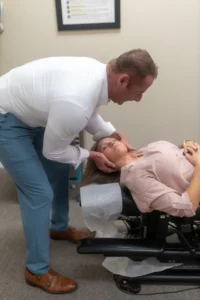
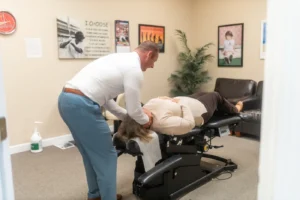
From there, care for sciatica pain usually centers on gentle, targeted adjustments to the lower spine and hips. The goal is to help reduce pressure on the sciatic nerve. Sessions are done fully clothed.
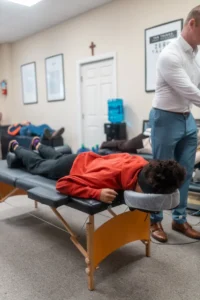
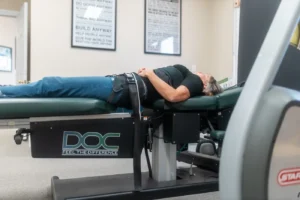
Depending on what he finds, Dr. J may also use flexion/distraction, the intersegmental traction table, or spinal decompression when a disc is involved. You can read more about each of these on our Our Method page. If you’ve been told surgery might be your next step, our post on back surgery alternatives and spinal decompression is a good place to start.
No two sciatica cases are the same. How often you come in depends on what Dr. J finds and how long you’ve been dealing with it, and visits typically taper as you improve.
Daily Habits That May Help Between Visits
What you do between appointments matters. These are the same habits Dr. J recommends to patients dealing with sciatica:
- Use a seat cushion on drives. A cushion or lumbar roll helps keep your lower back from rounding during longer trips.
- Change positions often. Get up, walk, or shift how you’re sitting every 30 minutes or so. Alternating which leg is forward can help too.
- Try a figure-four stretch. Lying on your back, cross one ankle over the opposite knee and gently pull the bottom leg toward you. Stop if it increases the leg pain.
- Use ice or heat. Many patients find ice helpful for a fresh flare-up and heat helpful for stiffness. Use whichever one feels better, 15 to 20 minutes at a time.
- Take short walks. Easy walking gets the glutes working and keeps the hips from locking up, which takes some load off the lower back.
When to Come In, and When to Go to the ER
If leg pain, tingling, or numbness lasts more than a week, it’s a good time to get it looked at. The same goes for new leg numbness, foot weakness, or sharp pain that keeps radiating down the leg.
Some symptoms need emergency care right away, not a chiropractic visit. Go to the emergency room if you notice:
- Loss of bladder or bowel control, or trouble urinating
- Numbness in the groin, inner thighs, or the area you’d sit on a saddle
- Weakness that’s getting worse quickly, or symptoms in both legs at once
- Severe back and leg pain after a major fall or car accident
- Back pain along with a fever or unexplained weight loss
These can point to a problem that needs immediate medical attention. Once you’ve been cleared, Dr. J is glad to help with what comes next.
Frequently Asked Questions
Can a chiropractor help with sciatica?
Chiropractic care may help when sciatica is related to pressure on the nerve from the lower spine, hips, or a disc. Dr. J uses gentle adjustments, and sometimes decompression, to help reduce that pressure and improve how the lower back moves.
Should I use ice or heat for sciatica?
Ice is often more comfortable for a new or sharp flare-up, while heat tends to help with stiffness and tight muscles. Some patients alternate the two. Keep sessions to about 15 to 20 minutes with a layer between your skin and the pack.
Is sciatica the same as a herniated disc?
Not exactly. Sciatica describes the symptoms, the pain running down the leg. A herniated or bulging disc is one possible cause of those symptoms, but tight hip muscles and joint problems in the lower back can also be involved.
Do I need a referral to be seen for sciatica?
No referral is needed to start care at Adjustin Chiropractic. You can come in directly for an evaluation.
Get Your Sciatica Checked in Quincy
You don’t have to keep working around leg pain every time you get in the car or stand up from your desk. Dr. J will take the time to find out what’s causing it and walk you through a plan that fits your schedule.
Call us at 217-242-0420 or schedule your appointment online. You can save time by filling out your intake form before your first visit. We’d love to see you ring that victory bell.